
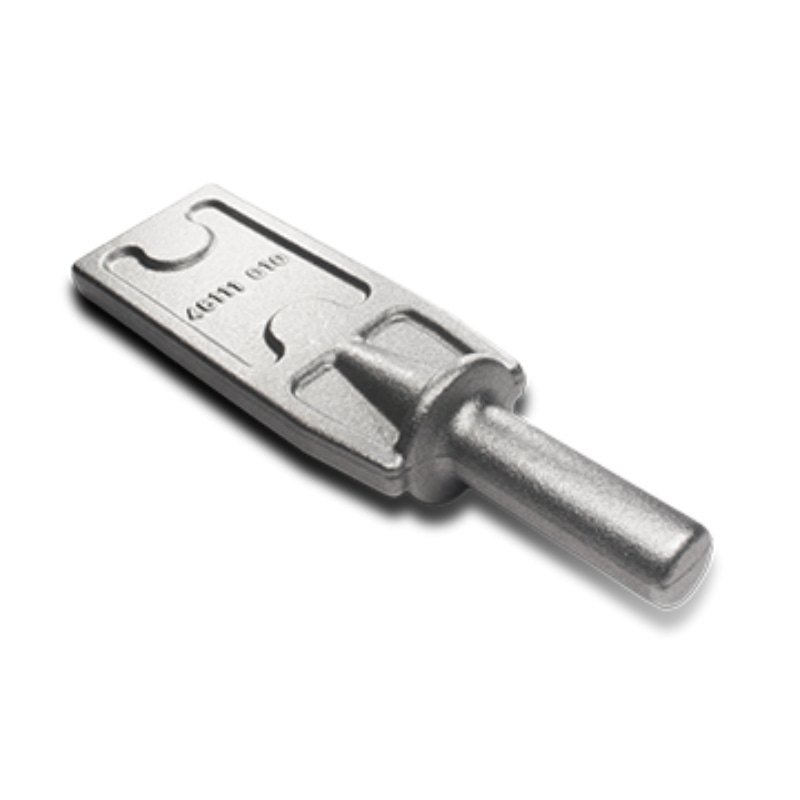
Hot forging is usually the better route when the part carries impact, bending or fatigue loads. The metal is formed in a closed die, so the grain flow follows the finished contour and the cross-section remains dense and continuous.
Casting is more economical when the geometry is complex, the wall section changes frequently or the part needs internal passages. Sand casting suits larger housings, while precision casting is suitable for smaller components that need a better as-cast surface.
The decision should also consider machining allowance, tooling cost, batch size, heat treatment and inspection requirements. A practical quotation compares the complete route rather than only the forming operation.